Vinyl flooring is a popular choice for homeowners because it offers an attractive appearance, practical performance, and relatively simple maintenance. Whether you have traditional sheet vinyl, luxury vinyl plank (LVP), or luxury vinyl tile (LVT), regular cleaning helps keep the surface looking fresh and prevents dirt, stains, and everyday debris from building up.
Although vinyl floors are generally easy to maintain, using the wrong cleaning products or too much water can affect their appearance and condition. A proper cleaning routine does not require expensive equipment or complicated techniques. With the right supplies and a few simple steps, you can keep your vinyl flooring clean and presentable.
In this guide, Cyndi’s Floors-N-More explains how to clean vinyl flooring, remove common stains, choose suitable cleaning products, and protect your floors from everyday damage.
What You Need to Clean Vinyl Flooring
Before starting, gather a few basic cleaning supplies. Using soft cleaning tools and suitable products helps remove dirt without scratching or damaging the vinyl surface.
Here is what you may need:
- Soft-bristled broom: Removes loose dirt, dust, and everyday debris.
- Vacuum cleaner: Helps collect dust and small particles from corners and edges. Use a hard-floor setting without a rotating beater bar.
- Microfiber mop: Cleans the surface without excessive abrasion.
- Warm water: Helps loosen everyday dirt and residue.
- pH-neutral vinyl floor cleaner: Removes accumulated dirt while being suitable for many vinyl flooring finishes.
- Soft cleaning cloth: Useful for wiping spills and treating small stains.
- Clean, dry towel: Helps remove excess moisture after cleaning.
Always check the flooring manufacturer’s maintenance instructions before using a new cleaning solution. Different vinyl products may have specific care requirements.
How to Clean Vinyl Flooring Step by Step
Cleaning vinyl flooring is straightforward when you follow the correct process. The goal is to remove loose dirt first, clean the surface gently, and avoid leaving excess moisture behind.
Step 1: Remove Dust and Loose Dirt
Start by sweeping the entire floor with a soft-bristled broom or using a vacuum cleaner designed for hard surfaces. Pay attention to corners, spaces beneath furniture, and areas around baseboards where dust and dirt often collect.
Small particles such as sand, gravel, and food crumbs can scratch the protective surface when people walk across the floor. Removing this debris before mopping also prevents it from mixing with water and spreading across the room.
If you use a vacuum, turn off the rotating beater bar to reduce the risk of surface scratches.
Step 2: Choose the Right Vinyl Floor Cleaner
After removing loose debris, prepare a suitable cleaning solution. A pH-neutral floor cleaner designed for vinyl or resilient flooring is generally a good option.
Follow the product label for the correct dilution and application instructions. Avoid using too much cleaner because excess product can leave a film that makes the floor look cloudy or attracts additional dirt.
For routine cleaning, warm water with an appropriate neutral cleaner is usually sufficient. Avoid experimenting with strong household chemicals or homemade mixtures unless the flooring manufacturer confirms they are compatible with your floor.
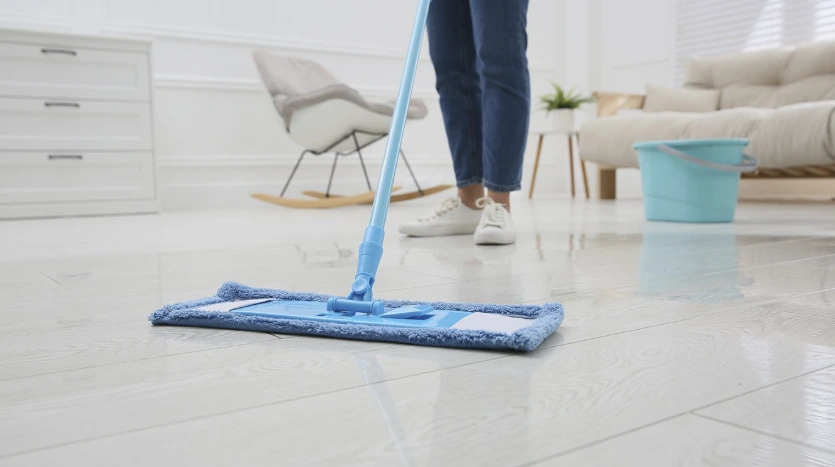
Step 3: Mop with a Damp Microfiber Mop
Dip a microfiber mop into the cleaning solution and wring it out thoroughly. The mop should be damp rather than soaking wet.
Clean the floor using gentle, even movements. Rinse the mop head regularly so you do not spread dirty water across areas that have already been cleaned.
For luxury vinyl plank flooring, you can follow the direction of the planks to help maintain a consistent cleaning pattern.
Avoid pouring cleaning solutions directly onto the floor or allowing water to collect around plank seams, edges, and corners.
Step 4: Remove Remaining Moisture
After mopping, check the floor for standing water or excess cleaning solution. Use a clean, dry microfiber cloth or towel to wipe away any remaining moisture.
Allow the floor to dry completely before moving furniture back into position or placing rugs on the surface.
This final step helps prevent moisture-related problems and keeps the floor ready for everyday use.
How to Remove Common Stains from Vinyl Flooring
Vinyl flooring can develop stains from food, beverages, footwear, household products, and everyday activities. Cleaning spills promptly is usually easier than removing marks after they have dried.
Here are some practical ways to handle common stains:
1. Food and Beverage Spills
Wipe up spilled food, juice, coffee, or other beverages with a clean, damp cloth. Use a small amount of manufacturer-approved vinyl floor cleaner if residue remains. Finish by wiping the area with clean water and drying it.
2. Mud and Dirt Marks
Allow excess mud to dry if necessary, then gently remove the loose material with a soft brush or cloth. Clean the remaining marks with a damp microfiber cloth and a suitable floor cleaner.
3. Scuff Marks from Shoes
Light shoe marks can often be removed using a soft microfiber cloth and a vinyl-safe cleaning solution. Avoid aggressive scrubbing or abrasive cleaning pads, which may affect the surface finish.
4. Grease and Oil Stains
Blot excess grease with a clean paper towel or soft cloth. Apply a small amount of suitable neutral floor cleaner according to its instructions, then wipe the area with clean water and dry it.
5. Ink and Marker Stains
These marks may require additional attention. Begin with a vinyl-safe spot cleaner and test it in an inconspicuous area. Avoid using acetone, nail polish remover, or strong solvents unless the flooring manufacturer specifically approves the product.
Important: Always test a cleaning product in a hidden area before applying it to a visible section of your vinyl flooring. This helps identify possible discoloration or surface damage.
What Should You Avoid When Cleaning Vinyl Floors?
Using inappropriate cleaning methods can affect the appearance and protective finish of vinyl flooring. Some products may leave residue, while others can cause discoloration, surface damage, or problems with the adhesive.
Here are some common mistakes to avoid:
- Steam mops: High temperatures can damage certain vinyl flooring products or weaken adhesives. Check manufacturer instructions before using any steam-cleaning equipment.
- Abrasive scrubbers: Steel wool, rough scouring pads, and abrasive powders can scratch the surface.
- Harsh chemicals: Strong bleach, ammonia, and concentrated cleaning solutions may affect the floor’s finish or color.
- Excessive water: Flooding the floor can allow moisture to enter seams, edges, and areas beneath the flooring.
- Wax and polish: Most modern vinyl flooring products have a factory-applied protective finish and do not require traditional waxing or polishing.
- Oil-based cleaning products: These can leave a slippery or sticky residue on the surface.
- Dishwashing detergent: Regular use can leave behind a film that attracts dirt and makes the floor appear dull.
Following the flooring manufacturer’s care instructions is the safest way to avoid unnecessary damage.
How Often Should You Clean Vinyl Flooring?
The cleaning frequency depends on household activity, foot traffic, pets, and how quickly dirt accumulates. A consistent routine helps prevent debris from scratching the surface and reduces the need for intensive cleaning.
A practical cleaning schedule includes:
| Cleaning Task | Recommended Frequency |
|---|---|
| Sweep or vacuum | Daily or as needed |
| Wipe up spills | Immediately |
| Damp mop | Weekly or as needed |
| Clean corners and edges | Weekly |
| Check for stubborn stains | As they appear |
| Inspect furniture pads and floor protection | Every few months |
Homes with children, pets, or heavy foot traffic may need more frequent cleaning. Areas such as kitchens, hallways, and entryways often collect more dirt than bedrooms or less-used spaces.
Adjust your cleaning routine according to the condition of your floors rather than following a rigid schedule.
How to Keep Vinyl Flooring Looking New
Regular cleaning is only one part of maintaining vinyl flooring. A few preventive measures can help reduce scratches, dents, stains, and other forms of everyday wear.
Use Entryway Mats: Place suitable mats near exterior entrances to collect dirt, sand, and moisture before they reach your floors. Check that the backing material is compatible with vinyl because some rubber-backed mats can cause discoloration.
Add Furniture Protection: Install felt pads or manufacturer-approved protective glides beneath chairs, tables, and heavy furniture. These help reduce scratches when furniture moves across the floor.
Clean Spills Quickly: Food, beverages, oils, and other household substances should be removed promptly to reduce the risk of staining.
Avoid Dragging Heavy Objects: Lift furniture and appliances when moving them whenever possible. Use appropriate floor protection when heavier items need to be repositioned.
Manage Direct Sunlight: Prolonged exposure to strong sunlight can cause some vinyl flooring products to fade or change color. Use curtains or blinds when necessary to limit direct exposure.
Keep Pet Nails Trimmed: Regular pet nail maintenance can help reduce surface marks caused by repeated walking and movement.
Use Appropriate Cleaning Products: Stick to compatible floor cleaners and avoid unnecessary treatments that can leave residue or affect the protective finish.
These simple habits can help maintain the appearance of vinyl plank, sheet vinyl, and vinyl tile flooring.
How to Make Dull Vinyl Floors Look Better
If your vinyl flooring has started looking dull, the problem may be accumulated dirt, cleaning-product residue, or surface wear.
Start by sweeping or vacuuming the floor thoroughly. Then clean it with a suitable pH-neutral vinyl floor cleaner and a damp microfiber mop. Rinse away any remaining residue if the cleaner’s instructions recommend it, and allow the surface to dry completely.
If the floor still appears dull after cleaning, check whether the protective finish has become worn or damaged. Cleaning cannot reverse scratches, discoloration, or deterioration of the surface layer.
Avoid applying furniture polish, wax, or other shine-enhancing products without checking the manufacturer’s recommendations. These products may create buildup and make future maintenance more difficult.
If the flooring has noticeable damage or persistent discoloration, a flooring professional can help determine whether specialized treatment or replacement is appropriate.
Frequently Asked Questions About Cleaning Vinyl Flooring
What Is the Best Thing to Clean Vinyl Floors With?
A pH-neutral floor cleaner approved for vinyl flooring, warm water, and a microfiber mop are generally suitable for routine cleaning. These supplies help remove everyday dirt without requiring harsh chemicals or abrasive tools. Always follow the flooring manufacturer’s cleaning recommendations.
Can I Use Dawn Dish Soap to Clean My Vinyl Floors?
It is better to use a cleaner specifically designed for vinyl flooring. Although diluted dish soap may remove some dirt, detergent residue can accumulate and leave the surface looking cloudy or attract additional debris. Check your flooring manufacturer’s instructions before using household detergents.
Can I Use Vinegar and Water on Vinyl Flooring?
Some homeowners use diluted white vinegar for household floor cleaning, but it is not suitable for every vinyl flooring product. Vinegar is acidic and may affect certain finishes or protective treatments. A manufacturer-approved neutral cleaner is generally a safer choice.
What Should You Not Use on Vinyl Floors?
Avoid abrasive powders, steel wool, harsh cleaning chemicals, oil-based soaps, and unapproved wax or polish. Steam mops should also be avoided unless the manufacturer specifically permits them. Excessive water can cause problems around seams and flooring edges.
How Do You Make Vinyl Floors Look New Again?
Begin with thorough sweeping or vacuuming, followed by damp mopping with an appropriate vinyl floor cleaner. Remove any remaining residue and allow the surface to dry. Regular cleaning, furniture protection, and prompt spill removal can help maintain the floor’s original appearance.
Keep Your Floors Looking Their Best with Cyndi’s Floors-N-More
Vinyl flooring is a practical option for homeowners who want attractive floors without complicated maintenance. With regular sweeping, gentle mopping, suitable cleaning products, and basic preventive care, you can maintain its appearance and keep everyday dirt from building up.
If you are considering new flooring or exploring options for your home, Cyndi’s Floors-N-More can help you learn more about flooring choices for your space. Whether you are updating one room or planning a larger home improvement project, choosing suitable flooring and understanding its maintenance requirements can help you make a more informed decision.
Contact Cyndi’s Floors-N-More to discuss your flooring needs in Kingman, AZ, and surrounding communities.